
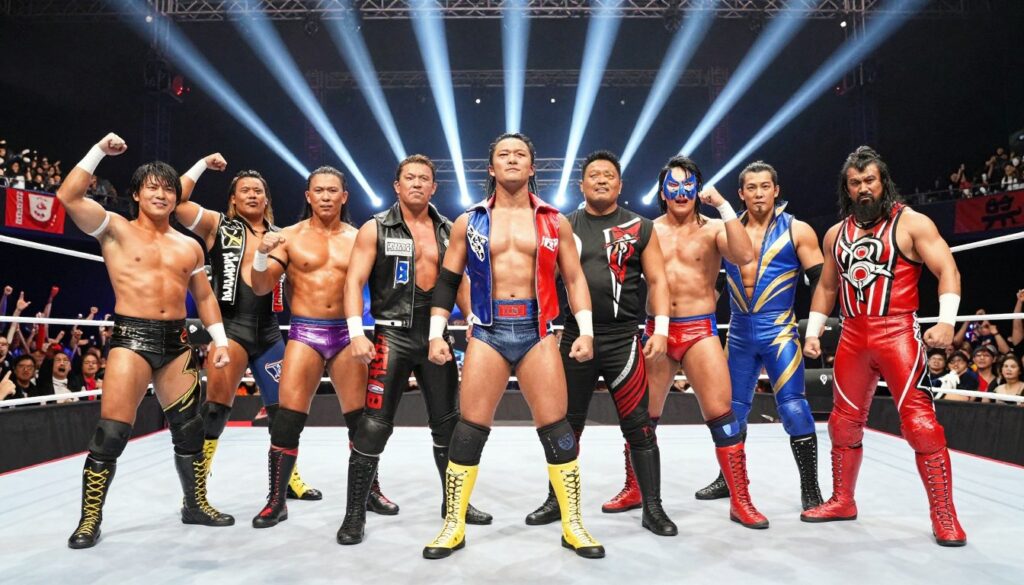
Roman Reigns and Liv Morgan won their respective Royal Rumble matches on January 31, 2026, earning championship opportunities at WrestleMania. Those results settled the headline question, but they did not capture every meaningful performance. Looking back at the event, the more useful wrestling discussion extends to who controlled stretches of action, who survived difficult situations, and whose elimination created another story to follow.
For readers following SCAR Sports wrestling coverage, that distinction offers a better way to assess a major event. A wrestler can lose without looking ineffective. Another can survive deep into a match without becoming its central figure. The task is to separate the official result from what the presentation actually established.
Match Time Needs Context, Not Automatic Praise
WWE’s official Royal Rumble statistics illustrate the difference between endurance and victory. Je’Von Evans lasted 40 minutes and 58 seconds in the men’s match without recording an elimination. Reigns won after spending 15 minutes and 48 seconds in the match, with five eliminations credited to him.

Those numbers describe different assignments within the same event. They should not become a simple ranking of wrestling ability. A long appearance creates room to demonstrate adaptability across several opponents and changing situations. A shorter appearance near the finish can concentrate attention on decisive confrontations.
The better viewing question is what happened during those minutes. Did the wrestler remain involved? Did their offense interrupt another competitor’s momentum? Did they survive through a recognizable skill, an alliance, or an opponent’s mistake?
Time becomes meaningful when it supports an identifiable performance. Without that context, praising the longest appearance risks confusing screen exposure with narrative importance. The stopwatch records duration; the action must supply the reason that duration matters.
Eliminations Show How A Wrestler Is Presented
Oba Femi and Lash Legend provide useful examples from the 2026 event. Femi eliminated five opponents, including Rey Mysterio and Solo Sikoa. Legend recorded five eliminations in the women’s match, with Charlotte Flair and IYO SKY among those she removed. Neither won.
An elimination sequence can establish a character’s threat more directly than a long introduction. Rather than telling viewers that someone belongs against established opponents, the match can demonstrate that claim through a clear action and consequence.
The sequence deserves closer attention than the total alone. Removing several vulnerable opponents tells one story. Overcoming resistance from someone presented as difficult to eliminate tells another. Both can serve a purpose, but they communicate different strengths.
For analysis, count the eliminations and then examine their construction. Look at the resistance, timing, assistance, and reactions within the match. This approach avoids treating a numerical achievement as proof of a future championship plan. A strong showing establishes what the event presented that night, not a guarantee about the months afterward.
Alliances Matter Most At The Moment They Break
The women’s match supplied a direct example of competing loyalties. Raquel Rodriguez eliminated Rhea Ripley, then Liv Morgan eliminated Rodriguez, her Judgment Day partner at the event. Cooperation gave way to individual advancement.
As a storytelling device, that sequence makes the alliance itself part of the action. The viewer does not need a separate explanation of why a partnership might become unstable. The conflict appears through a decision that immediately changes who remains in the match.
That does not establish anything about the performers’ personal relationships. It is an on-screen development, and the analysis should stay there. Claims about resentment, private disagreements, or backstage intentions require evidence beyond a televised elimination.
The useful question is whether the choice fits the characters as presented. An opportunistic elimination can reveal ambition. A reluctant confrontation can suggest divided loyalty. An accidental elimination can create uncertainty. Those possibilities make alliances worth following, but the exact interpretation must come from the sequence rather than a predetermined theory.
The Method Of Defeat Can Preserve A Rivalry
Cody Rhodes’ exit demonstrates why the final result needs explanation. WWE’s 2026 match recap records Drew McIntyre striking Rhodes with a Claymore from outside the match to cause his elimination. That is a different narrative outcome from Rhodes losing a direct exchange to another entrant.
Outside interference supplies a specific grievance. It shifts the immediate question from whether the eliminated wrestler could have survived to what happens between the characters responsible for the incident.
That device should still be judged critically. A finish can preserve a wrestler’s credibility and leave the audience dissatisfied with the contest’s resolution. Those assessments are not mutually exclusive. Protecting a character from a straightforward defeat does not automatically make the alternative more effective.
A useful review asks whether the interference clarified the next conflict or merely interrupted the present one. The answer should depend on the match’s structure and subsequent on-screen developments, not an assumption that every disputed finish has a successful long-term plan behind it.
The Final Stretch Should Change The Viewing Experience
Morgan’s closing opposition consisted of Tiffany Stratton and Sol Ruca. Stratton eliminated Ruca before Morgan eliminated Stratton to win. WWE’s account describes a final sequence built around the three wrestlers contesting their positions on the apron.
The analytical value lies in the change of scale. With fewer people involved, each movement can carry a clearer consequence. An escape, a missed attack, or a moment spent watching the wrong opponent can become decisive.
This is where a strong finishing sequence should justify the time invested in the match. The audience should be able to follow who faces immediate danger and why the winner finds an opening.
Surprise alone is an incomplete standard. A result can be unexpected yet poorly explained by the action. A more predictable winner can still benefit from a finish that makes the final obstacle convincing. Judge the execution separately from whether the outcome matched a personal preference.
Separate Match Evidence From Booking Predictions
WWE’s 2025 Royal Rumble results identify Jey Uso and Charlotte Flair as that year’s winners. Comparing editions can be useful, but it should begin with documented outcomes rather than a claim that every performance follows the same career pattern.
A lengthy appearance, several eliminations, or a final-stage confrontation can support an argument that a wrestler received meaningful attention. None of those details independently confirms a future title victory, a permanent change in status, or a particular backstage decision.
The same distinction applies to outside commentary. Readers consulting BetOnline sportsbook user reviews are researching a betting service, not verifying WWE’s creative plans. Wrestling analysis should remain grounded in the televised presentation and documented results.
This discipline makes an assessment more precise. Instead of declaring that someone has been guaranteed a leading role, describe what the match gave them: credible offense, sustained involvement, a consequential elimination, or a clearly defined conflict.
What To Watch During A Royal Rumble Rewatch
On a rewatch, follow one wrestler rather than trying to track every entrance equally. Note when they become involved, what changes after their involvement, and how the match explains their eventual exit. This creates a manageable way to evaluate the performance without relying entirely on the closing result.
Then examine the transition between the opening, middle, and final stretch. Ask whether the match introduces distinct challenges or repeats the same situation with different people. Watch for the point at which cooperation stops being useful and individual survival takes over.
The final judgment should be specific enough to defend. “They should have won” expresses a preference. “Their offense established them as a threat, but their elimination ended that thread without a meaningful confrontation” evaluates the presentation.
A Royal Rumble review becomes more useful when it can explain both the winner’s achievement and the work performed by everyone who made that achievement convincing.


