
Welcome, wrestling fans! We’re excited to dive into the global wrestling world together. For thousands of years, people worldwide have wrestled. It’s a sport that brings us together across cultures.
Our adventure starts in ancient times. Wrestling’s history is long, from the Olympic games to local matches. Every culture has its own wrestling style, showing strength and skill.
Japanese Puroresu is known for its technical skill. Mexico’s Lucha Libre is famous for its aerial moves. Greco-Roman, Freestyle, and folk styles from everywhere celebrate human spirit.
We see a shared love in these traditions. Techniques and rules vary, but the sport’s heart is the same. Let’s honor the athletes and the global community that loves this sport.
Why Wrestling Styles Differ
The world of global wrestling is rich and varied. It’s shaped by history, culture, and local traditions. This diversity is not a weakness but a beautiful expression of human competition.
The differences in wrestling styles come from centuries of history and values. Each style reflects the unique spirit of a people. To understand a wrestling style, you must know its culture.
In Scotland’s highlands, the Cumberland and Westmorland style emerged. It’s a test of strength where a throw wins the match. In Turkey’s mountains, Yağlı güreş (oil wrestling) combines power and strategy.
These styles grew from the land, work, and celebrations of the people. They are a community’s history, told through holds and pins.
The rules of the ring also tell a story. Are victories won by pin, submission, or judges’ decisions? Can you use your legs to trip? These rules shape the art of wrestling.
For example, Greco-Roman wrestling is strict and upright. Freestyle wrestling is more dynamic and allows leg grabs. The rules define the style.
Let’s look at how different styles compare. The table below shows how rules and goals can vary.
| Style | Primary Origin | Key Rule / Focus | Primary Win Condition |
|---|---|---|---|
| Folk (e.g., Cornish, Cumberland) | Regional Europe | No holds barred, often with jackets; win by throwing opponent to ground. | Throw opponent to the ground. |
| Greco-Roman | Revived from Ancient Greece | No holds below the waist; all attacks with arms and upper body. | Pin or technical superiority. |
| Freestyle | International (Modern Olympic) | Can use legs for offense and defense; more dynamic groundwork. | Pin, technical fall, or points. |
| Theatrical/Pro | Global (Modern Entertainment) | Pre-determined outcome, athletic theatre. | Pin, submission, or count-out as dictated by story. |
This diversity is a strength, not a weakness. We love these roots because they tell a deeper story. Each wrestling style reflects its culture’s soul.
The stoic style of British “Catch-as-catch-can” wrestling shows pragmatism. Mexican Lucha Libre is a vibrant celebration. They are different, making global wrestling rich.
Professional wrestling, or “sports entertainment,” is a unique form. It focuses on storytelling, not just competition. Yet, it has roots in carnival strongmen and traveling shows. Wrestling is a theatre of human struggle and triumph.
We are grateful for this incredible global wrestling tapestry. Every style has a story, and every hold has a history.
Japanese Puroresu
Exploring professional wrestling, we’re drawn to Japanese Puroresu. It’s more than wrestling; it’s a cultural icon. It shows respect for athleticism and storytelling.
It mixes the competitive spirit of sports with the drama of entertainment. This blend is truly captivating.
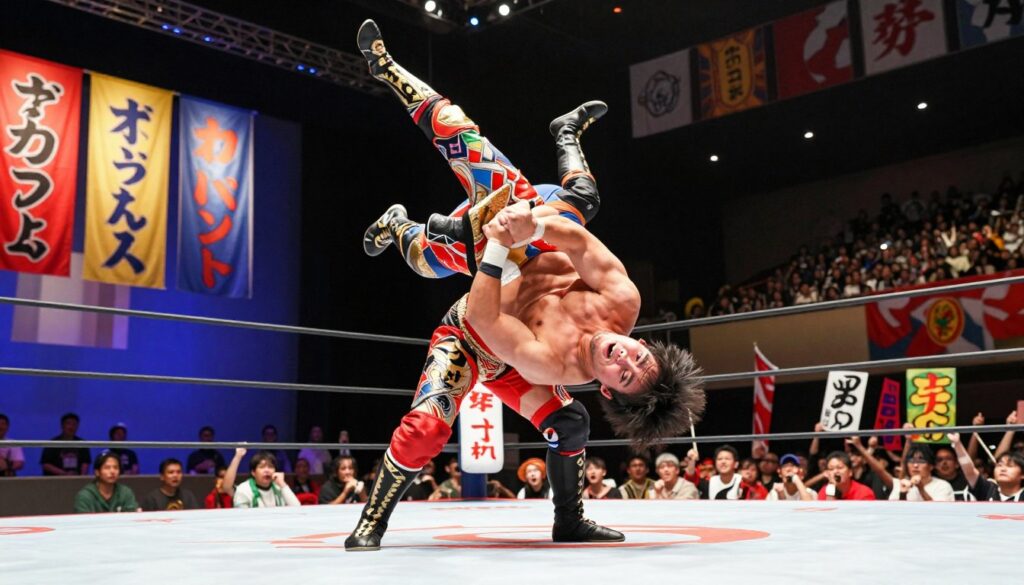
Puroresu stands out for its “strong style” philosophy. It’s not about flashy moves. Every strike and slam is real and carries weight.
Wrestlers train like martial artists. Their matches feel like real competitions, not just shows.
Their work ethic is inspiring. They prepare physically, mentally, and spiritually. They follow the “bushido” way, treating each match as a serious contest.
This tradition honors Japan’s martial arts while making modern legends. The intensity is real, making us feel the struggle. It has created global respect for these athletes.
Puroresu is a powerful art form. It honors wrestling’s roots and creates a unique spectacle. It’s about human struggle, discipline, and excellence. This is what inspires us.
Mexican Lucha Libre
Lucha Libre is more than wrestling; it’s a vibrant part of Mexican culture. It combines amazing athleticism with deep traditions. This makes it a spectacle that brings families and communities together.
The luchadores, or masked wrestlers, are at the heart of Lucha Libre. Their máscara (mask) is a symbol of their identity and honor. The athleticism in Lucha Libre is incredible, with wrestlers performing high-flying moves that amaze audiences.
Lucha Libre is special because it mixes athletic competition with cultural performance. It’s a family tradition that spans generations. The colorful masks tell stories, making wrestlers into legendary figures.
| Aspect | Lucha Libre | Other Wrestling Styles |
|---|---|---|
| Primary Focus | High-flying acrobatics, fast-paced action | More grounded, power-based techniques |
| Key Moves | Topé, Hurricanrana, Moonsault | Power slams, submissions, strikes |
| Cultural Role | Family entertainment, cultural symbol | Sporting competition, entertainment |
| Visual Identity | Colorful masks and capes (traje de luces) | Standard wrestling attire |
| Audience Appeal | All ages, family-friendly spectacle | Varied, often adult-oriented |
Lucha Libre is a living tradition that connects generations. The masks and capes are symbols of identity and honor. Each luchador has a unique persona, often representing moral values.
What we find most beautiful about Lucha Libre is how it creates community. Matches become vibrant celebrations where families gather. This wrestling style has introduced the world to a unique blend of athleticism, theater, and cultural pride.
British Technical Style
When we think of wrestling, we often think of the British wrestling style. This style is all about being precise and smart. It’s a game that requires thinking, not just strength.
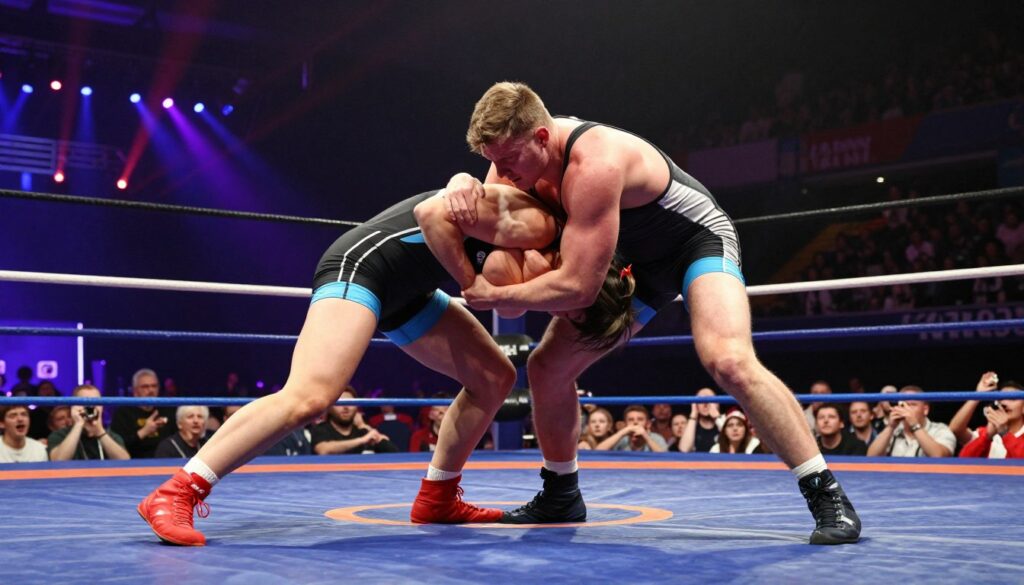
This style comes from 19th-century England, mainly Lancashire. It started as “catch-as-catch-can,” a no-holds-barred wrestling. It was a test of brains and strength, where smaller wrestlers could beat bigger ones.
This style is all about thinking. It’s like a physical chess game. Every move is a thought-out plan. It’s not about one big slam, but about slowly getting control.
To understand it, we need to see how it’s different from other styles.
| Style | British Technical | Lucha Libre | Japanese Puroresu |
|---|---|---|---|
| Primary Focus | Joint locks, holds, mat control | High-flying, acrobatic sequences | Hard-hitting, realistic strikes |
| Key Philosophy | Technical control & submission | Showmanship & spectacle | Strong style, fighting spirit |
| Key Moves | Wristlocks, toe holds, headlocks | Dives, flips, aerial moves | Stiff strikes, suplexes |
The British technical style is in every wrestling room. It teaches us that knowledge can beat strength. Modern wrestlers around the world owe a debt to these Lancashire wrestlers.
We’re thankful for this legacy. It shows wrestling is as much about the mind as the body. The British style teaches us that true strength is in being smart, not just strong.
Puerto Rico’s Brawling Style
In Puerto Rico, wrestling is all about the raw, intense brawl. It’s not about fancy moves or technical holds. It’s about the heart and grit of its people. This style tells powerful stories of struggle and victory.
This hard-hitting, brawling style is what makes Puerto Rico unique in wrestling. It’s a mix of pride and resilience, where every match is a story of overcoming. The action is fast, fierce, and every punch and slam counts.
The style combines raw power with street-fight smarts. It’s known for its hardcore elements and wild brawls. But it’s more than just chaos. It’s a blend of psychology and fearless, high-impact moves that excites fans. The influence of professional wrestling in Puerto Rico adds a unique Caribbean flavor.
At its heart, this style is about telling stories. Wrestlers bring raw energy to the ring, making it a stage for drama. It’s a mix of skill and determination, where willpower is as important as moves.
This intense style has launched global stars. Many popular wrestlers started in Puerto Rico. They took this unique style to the world, winning fans everywhere.
How Styles Influence Modern Wrestling
The world of wrestling is a colorful mix of different styles. British wrestling is known for its technical skill. Lucha Libre brings the excitement of flying moves. Puroresu is all about hard-hitting action, and brawling styles add a raw energy.
These styles have come together, creating the modern wrestling we love today. It’s a mix of old and new, making wrestling more exciting than ever. This blend shows how different traditions can come together to create something amazing.
Organizations like United World Wrestling (UWW) focus on Olympic wrestling. But the world of professional wrestling is always changing. AEW and WWE show this by mixing technical moves with high-flying stunts.
Now, stiff strikes from Japan’s New Japan Pro-Wrestling (NJPW) meet the acrobatic moves of Lucha Libre. This mix is not just for fun; it’s the growth of wrestling as an art. The wrestling world has no borders, united by a love for the sport.
This fusion is a sign of wrestling’s bright future. It shows how athletes can keep the sport fresh and exciting. The global wrestling community is always evolving, making the sport more thrilling for everyone.