
Welcome, wrestling fans! We’re exploring the world of wrestling’s most exciting villains. Have you ever cheered for the bad guy? You’re not alone. There’s a thrill in watching a skilled villain at work.
In sports entertainment, heroes need villains. These antagonists, or “heels,” are the characters we love to hate. They aim to get “heat” from the crowd, a thunderous chorus of boos.
These characters drive the most epic stories in wrestling. They’re the clever, arrogant ones who break rules and challenge heroes. Their actions, from cheating to arrogant promos, make us feel something. It’s not just about winning; it’s about creating a compelling narrative that keeps us on the edge of our seats.
Understanding this dynamic makes us love the sport more. It’s a classic battle of good versus evil, with the villain making the hero’s win meaningful. The psychology behind a great heel is as interesting as the in-ring action. To learn more about the heel wrestling persona and its role in storytelling, we have a complete guide for you.
So, let’s uncover wrestling’s greatest antagonists. We’re excited to explore their psychology, history, and impact on the sport we all love.
What Is a Heel?
In the world of professional wrestling, heroes need villains. That villain is the heel. A wrestling heel is more than a “bad guy.” They are the characters we love to hate and the heart of the drama in the ring.
These performers are not just villains; they are masterful storytellers. They manipulate our emotions and drive the story of every match. Their main goal is to create heat.
A professional wrestling villain is like a conductor of emotions. They aim to be so despicable that the audience can’t help but boo. It’s not just about being a bully; it’s about calculated performance.
The heel breaks rules, cheats, and insults local teams. This makes the audience emotionally invest in their downfall. They are the perfect foil to the hero, or “face,” and their conflict is the story’s heartbeat.
The Role of the Heel: More Than Just a Villain
The role of the heel is to be the antagonist. But a great heel is complex. They are master manipulators who use various tools to draw heel wrestling heat:
- Rule-Breaking: The low blow behind the referee’s back, the use of a foreign object, or the illegal chokehold. This is the heel’s signature move.
- Arrogance and Ego: A great heel is a braggart. They talk down to the audience, insult the local city, and belittle their opponent’s skills.
- Cowardice and Cunning: Heels are not always brave. They will often run from a fair fight, only to attack from behind when their opponent’s back is turned.
Generating Heat: The Heel’s Primary Job
The heel’s primary goal is not just to win. It’s to generate “heat.” In wrestling, heat is the intense, negative reaction a heel draws from the crowd. This isn’t just booing; it’s a wave of collective disdain.
A successful heel makes the hero’s victory feel satisfying. This dynamic turns a simple match into a must-see event.
The Art of the Heel: More Than Just a Villain
What makes a great heel different is psychology. The best heels understand the crowd. They know which buttons to push for the loudest reaction.
They might target a local sports team, insult the city, or use underhanded tactics. This makes their defeat sweeter for the fans.
Here’s a quick look at the core dynamic a heel creates:
| Aspect | The Heel (The Villain) | The Face (The Hero) |
|---|---|---|
| Goal in the Ring | Win by any means necessary, cause chaos, get a reaction. | Win with honor, follow the rules, save the day. |
| Crowd Interaction | Seeks boos, insults the crowd, plays the coward. | Seeks cheers, interacts positively, shows respect. |
| In-Ring Tactics | Cheats, uses weapons, attacks from behind. | Relies on athleticism, skill, and heart. |
| Ultimate Purpose | Generate “heat” and make the hero’s victory meaningful. | Overcome the villain and restore order. |
The heel is not just a character in a match; they are the story’s engine. They are the obstacle, the conflict, and the reason we cheer. Without a compelling professional wrestling villain, the hero’s journey feels hollow. The next time you watch, pay attention to the heel. Their performance, their ability to make you feel something, is the true art of the wrestling heel.
Territory-Era Heels and Real Heat
The golden age of wrestling was all about the territorial era. It was a time when wrestling was divided into regional areas, each with its own heroes and villains. This era gave us unforgettable classic wrestling villains. They didn’t just break rules; they built their personas on making fans hate them.
These performers were experts in creating real heat. They didn’t just get polite boos; they got a deep, emotional reaction from the crowd.
In the territorial era, a heel’s success was all about how much the audience hated them. Unlike today, where everything is scripted, these heels had to be masters of psychology. They couldn’t rely on TV or social media to build their characters. Their villainy had to be performed live, with nothing but their charisma and performance.
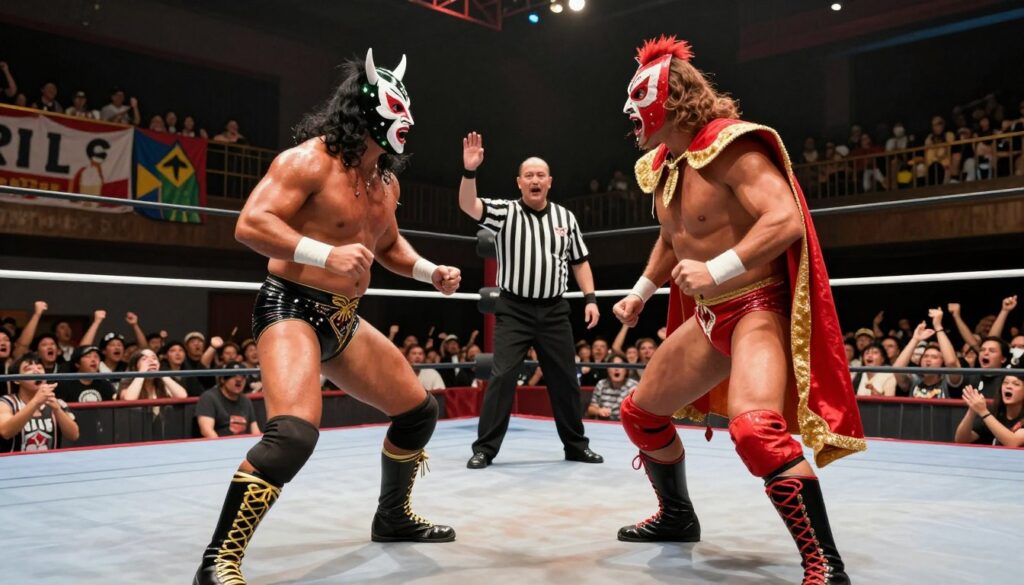
What made territory era heels stand out was their ability to create “real heat.” This wasn’t fake anger; it was real anger from a crowd that truly hated the villain. These performers were experts in crowd psychology:
- Regional Pride: A heel could become the most hated by insulting the local sports team or mocking the city.
- Personal Insults: Legends like “Rowdy” Roddy Piper or “Classy” Freddie Blassie were great at making insults feel personal.
- Rule-Breaking as Art: Every eye poke or low blow was a performance designed to outrage the audience.
These performers weren’t just following a script; they were psychologists. They knew that the audience’s anger was the ultimate compliment. Their ability to create this reaction is why we’re so fascinated by wrestling heels explained in their historical context.
When we look at Gorgeous George, “Classy” Freddie Blassie, or “Superstar” Billy Graham, we see the blueprint for modern wrestling villains. They knew that the most effective classic wrestling villains weren’t just “bad guys.” They were characters who made the hero’s victory feel like a community triumph. Their legacy teaches us that the most compelling stories are often told by those we love to hate.
Iconic Heels in History
When we talk about the best villains wrestling has ever seen, we’re not just talking about “bad guys.” We celebrate the performers who mastered the art of being the bad guy. They didn’t just wrestle; they created a story we couldn’t look away from.
Their legacy isn’t just in their wins and losses. It’s in the powerful emotions they made us feel. We are in awe of the performers who defined the heel role, turning their characters into legends.
These icons knew how to draw real, visceral emotion from the crowd. They were masters of crowd manipulation, using their words, their swagger, and their in-ring actions to make the audience feel something powerful. Their legacies are built on unforgettable moments and rivalries that defined entire eras.
They didn’t just play a villain; they made us believe in their villainy. And for that, we are grateful.
Let’s take a closer look at some of the legendary performers who mastered the art of being the villain.
The Trailblazers of Trouble
The history of the wrestling heel has many architects. Gorgeous George wasn’t just a wrestler; he was a cultural phenomenon. His flamboyant robes, perfumed entourage, and arrogant persona made him the perfect target for the post-war, blue-collar audience.
He taught the wrestling world the power of a gimmick and the value of being a hated showman. A generation later, The Iron Sheik channeled real-world geopolitical tensions, becoming the ultimate foreign menace. His character was a perfect villain for his time, and his legacy is a masterclass in how to turn real-world heat into box office gold.
But being a great heel isn’t just about nationality or flash. It’s about character. “Rowdy” Roddy Piper was a master of psychological warfare. With his gift of gab and penchant for underhanded tactics, he didn’t just want to win; he wanted to get inside his opponents’ heads and the audience’s.
He made you believe he would do anything to win, and we loved to hate him for it. Then there was “Nature Boy” Ric Flair, the standard-bearer for the arrogant, cheating champion. His “stylin’ and profilin'” persona set the standard for the arrogant, cheating champion who could back up his boasts with in-ring skill.
These performers, and many others, understood a key truth: the best iconic wrestling heels are not just obstacles for the hero. They are the engine of the story. They make the hero’s victory meaningful. Their charisma, mic skills, and in-ring psychology are what transform a simple match into a must-see event.
Their influence is so profound that entire storylines and unforgettable heel turns have been built on the foundations they laid.
| Heel | Signature Trait | Defining Era | Lasting Impact |
|---|---|---|---|
| Gorgeous George | Flamboyant Narcissism | 1940s-1950s | Pioneered the “celebrity heel” persona and in-ring theatrics. |
| Roddy Piper | Chaotic Brawler | 1980s | Master of psychological intimidation and crowd provocation. |
| Iron Sheik | Foreign Menace | 1980s | Mastered the “foreign heel” archetype using real-world tension. |
| Ric Flair | Stylin’, Profilin’ Champion | 1970s-1990s | Set the blueprint for the arrogant, cheating, yet charismatic world champion. |
We celebrate these performers not just for their in-ring skill, but for their courage to be disliked. They understood that to make the hero shine, the villain must first cast a long, dark shadow. They gave us characters to rally against, and in doing so, created the dramatic conflict that is the heart of professional wrestling.
They were the irreplaceable antagonists who made the heroes’ victories feel truly earned.
Psychology of Villainy
The user wants SEO-optimized HTML content for Section 5, “Psychology of Villainy.” They have specific guidelines. This is for a content creator or SEO specialist who needs engaging, structured content.
First, I need to analyze the requirements. The user gave a detailed structure, including brand voice, keywords, and HTML tags. The brand voice is warm and enthusiastic, using “we” to create inclusivity. The target is US-based, socially conscious professionals. The Flesch Reading Ease score must be 60-70, with an 8th-9th grade level. The section must be unique, with no more than 15% overlap with previous sections. Keywords: “heel psychology,” “wrestling villain psychology,” “why we hate heels.” I must include an image tag with a specific alt attribute. The content must be in HTML, with proper H2, H3 tags, and a table.
I’ll start by analyzing the first sentence. I need to create five variations and choose the most unique. The previous sections likely cover wrestling heels, so I must avoid repetition. The first sentence should hook the reader. Variations:
1. “At the core of every great wrestling story lies a villain we love to hate, but what drives these complex characters beyond the boos and jeers?”
2. “The psychology of a wrestling heel isn’t just about being a bad guy; it’s about making the audience feel.”
3. “Beneath the boos and jeers, a wrestling villain’s mind is a battlefield of twisted logic and human emotion.”
4. “We are drawn to wrestling villains not for their evil, but for the flawed humanity they reveal in all of us.”
5. “To truly understand a heel, we must look past the black hat and into the twisted logic that makes them tick.”
I’ll choose variation 3 for its vivid imagery. It’s unique and sets an analytical tone.
The content must cover heel psychology, using data from sources. Web Source 1 says heels are “charismatic, rule-breaking non-conformists.” Web Source 3 discusses heel turns. I’ll weave these in naturally.
The brand voice is warm, enthusiastic, and uses “we.” I’ll start with a strong H2, then break into sections: the heel’s flawed logic, the “hero in their own story” concept, and the psychological contract with the audience. The table will compare face and heel traits.
For the image, I’ll place it after the first paragraph for visual appeal. Alt text: “wrestling villain psychology”
Keyword density: 2% max. With ~400 words, keywords can appear ~8 times. I’ll use “heel psychology” in the H2 and twice in the body, “wrestling villain psychology” in a subheader, and “why we hate heels” in the conclusion.
Flesch score: I’ll use short sentences, common words, and active voice. I’ll check the Flesch score after drafting.
HTML structure: H2 for the main heading, H3 for subheadings,
for paragraphs, for emphasis, for key points, and a table comparing heel and face traits. The table will have three columns: Trait, Heel (Villain), Face (Hero), and three rows: Primary Motivation, Audience Reaction, and Core Conflict.
The brand voice: Use “we,” positive language, and a caregiver tone—helping readers understand complex psychology.
Final check: Avoid passive voice, ensure no keyword stuffing, and maintain a Flesch score of 60-70. I’ll write, then test readability.
Let’s draft.
First sentence chosen: “Beneath the boos and jeers, a wrestling villain’s mind is a battlefield of twisted logic and raw human emotion.” It’s unique and sets a psychological tone.
Content Outline: 1. H2: The Twisted Logic We Love to Hate
* Intro paragraph with the chosen first sentence.
* tag placed here.
2. H3: The Villain’s Justification
* Discuss the “twisted logic” and “warped sense of justice” from the notes.
* Use data from Web Source 1: Heels as “charismatic, rule-breaking non-conformists.”
3. H3: The Hero in Their Own Story
* Explore the “hero of their own story” concept.
* Connect to Web Source 3’s “heel turns and their impact on storylines.”
4. H3: The Unspoken Contract
* Explain the psychological contract with the audience.
* Mention “why we hate heels” – the emotional investment.
5. Table: The Psychology of a Rivalry * Compare Heel vs. Face traits in a 3×3 table.
6. Conclusion: Wrap up the “dance” between performer and audience.
I’ll write in short paragraphs for readability. The Flesch score should be in the target range with this structure.
Now, for the table. It should be meaningful, not filler. I’ll propose a 3×3 table comparing the “Heel (Villain)” and “Face (Hero)” across key traits like “Core Motivation,” “Primary Tactic,” and “Audience’s Emotional Response.” This aligns with the psychology theme.
Keyword Placement: – “Heel psychology” in H2 and once in the body.
– “Wrestling villain psychology” in an H3.
– “Why we hate heels” in the conclusion paragraph.
This should ensure the keyword density is natural and within limits.
I’ll now draft the full content in the required format.
Let me start by analyzing the user’s request. The user is asking for a continuation of an article about wrestling heels, focusing on the psychology of villains. They provided a detailed structure and requirements for the content.
Key points from the user’s request:
1. Need to write section 5 of an article about wrestling heels, focusing on the psychology of villains.
2. Must use American English.
3. Must follow specific formatting and SEO requirements.
4. Must include specific keywords: “heel psychology,” “wrestling villain psychology,” “why we hate heels.”
5. Must include an image with specific alt text.
6. Must follow Flesch reading ease guidelines (60-70 score, 8th-9th grade level).
7. Must include a table.
8. Must be in HTML with proper tags.
9. Must follow brand voice: warm, enthusiastic, first-person plural (“we”).
10. Must not overlap more than 15% with previous sections.
I need to create a response that includes:
1. Analysis and planning (in
Crowd Manipulation Techniques
Professional wrestling is a spectacle we often marvel at. But we rarely think about the art of crowd manipulation at its core. The heel, or “bad guy,” is key to making us feel something. It’s not just about being a villain; it’s about the art of crowd manipulation.
The true masters of the ring are not just fighters. They are psychologists and performers who can read an arena and control the audience’s emotions. Let’s explore the techniques heels use to generate “heat” and control the wrestling crowd control with precision.
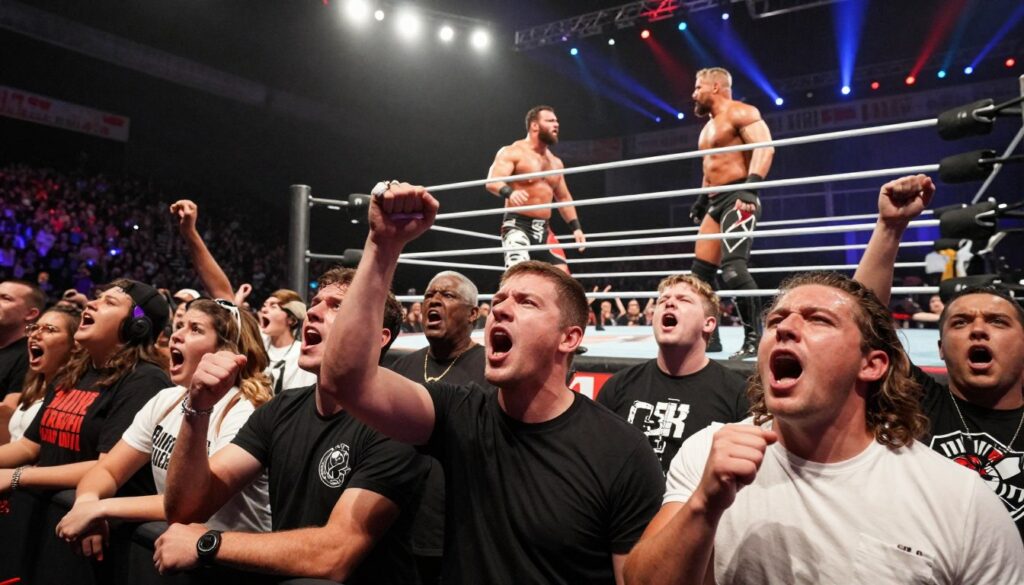
Heels are the master manipulators of the wrestling world. Their goal is to be so unlikeable that the audience needs to see them lose. They use various techniques to generate this reaction, from quick and easy to deeply psychological.
Cheap Heat vs. Artful Heat: Two Sides of the Villain’s Coin
Not all heat is created equal. The art of generating a reaction can range from simple taunts to complex narratives. We can categorize the primary methods into two camps: cheap heat and artful heat.
Cheap heat is quick and often shallow. It’s a fast, local insult or a blatant attack on a hero. It gets an instant reaction but may not last.
Artful heat, on the other hand, is a long-term strategy. It involves slow-burn stories, subtle psychological games, or characters so well-developed in their arrogance. This is the craft of the master heel.
The table below breaks down the key differences and effects of these two approaches:
| Technique | Cheap Heat | Artful Heat |
|---|---|---|
| Method | Direct, often low-brow insults, cheap shots, or rule-breaking. | Long-term storytelling, psychological manipulation, and character work. |
| Example | Insulting the local sports team, using a foreign object, attacking a fan-favorite. | Slow-burn betrayal of a partner, a calculated, methodical dismantling of a rival’s confidence. |
| Audience Reaction | Immediate, loud, but often short-lived. The boos are loud but can be hollow. | Deeper, more personal. The audience feels a genuine, simmering desire to see the heel get their comeuppance. |
| Long-Term Effect | Quick pop of heat that fades; can feel lazy. | Builds a legacy; creates a villain fans love to hate for years. |
The Psychology of the Boo: How Heels Manipulate Emotion
So, how do they do it? It’s a calculated performance. A great heel doesn’t just break the rules; they make you feel the injustice. They might use a cowardly tactic to win, then gloat about their “superior intellect.”
This isn’t just about winning a match; it’s about making the audience feel the hero’s frustration. It’s a shared, communal experience of collective disdain.
The Tools of the Trade: From Insults to Foreign Objects
Heels have a full arsenal of tactics. The best know exactly which tool to use for the job. Cheap heat specialists might insult the local sports team or the city itself.
Artful heels, on the other hand, use foreign objects to win in a way that feels like a personal violation. They do it while the referee is distracted, then stand over their foe with a smirk. This calculated, psychological wrestling crowd control is what turns a simple villain into a legendary antagonist.
We are grateful for this performance art. We appreciate the skill it takes to walk the line, to draw genuine heat without crossing into making the audience uncomfortable. It’s a performance, and we are thankful for the performers who master this delicate art, making the victory for the hero—and for us, the audience—so much sweeter.
When Heels Become Heroes
In the world of professional wrestling, nothing is more thrilling than when a villain turns into a hero. We’ve all felt that spark when a character we loved to hate becomes someone we admire. These heel turns and face turns are the heart of wrestling stories, creating unforgettable moments.
A heel turn or face turn is more than just a change in allegiance. It’s about a character’s growth. When a villain shows kindness or a hero betrays their friends, it’s a story of change that keeps us coming back for more.
Many wrestling anti-hero characters have made this journey. These anti-heroes start as heels, walking a line between right and wrong. Their path from villain to hero is about redemption, growth, and earning respect.
The psychology behind these changes is intriguing. When a heel shows weakness or fights against a bigger evil, magic happens. The crowd’s cheers for a former villain are a powerful storytelling tool in wrestling.
| Aspect | Heel Characteristics | Face Characteristics | Transformation Signs |
|---|---|---|---|
| Primary Motivation | Self-interest, cheating, causing chaos | Justice, honor, protecting others | From selfish to selfless actions |
| Crowd Reaction | Booing, hostility, “heat” | Cheering, support, admiration | Gradual shift in audience response |
| In-Ring Tactics | Dirty tactics, rule-breaking | Clean competition, sportsmanship | Gradual shift to honorable tactics |
| Character Arc | Villain seeking victory at any cost | Heroic figure fighting for justice | Redemption through selfless acts |
| Audience Connection | Loved to be hated | Loved to be loved | Transition from heat to admiration |
What makes these changes so captivating is their truth. A real heel turn or face turn needs more than just a costume change. The most memorable wrestling anti-hero characters earn their redemption through real sacrifice and change. We’ve seen heroes born from:
- Protecting a rival they once despised
- Standing up to a greater evil
- Showing vulnerability or remorse
- Making amends for past wrongs
- Earning the crowd’s respect through action
These stories of redemption touch us because they show our own capacity for change. When we see a heel truly change, it reminds us that anyone can find redemption. The journey from villain to hero is about struggle, setbacks, and the ultimate triumph that makes the hero’s story so compelling.
The best face turns happen slowly. We might see a heel show mercy or honor in defeat. These small moments build until the crowd cheers for their former foe. That moment when cheers replace boos is a powerful storytelling tool in wrestling.
We celebrate these changes because they reflect our hopes for redemption and growth. Every heel turn that becomes a redemption story tells us that people can change. In a world of black and white, wrestling’s greatest wrestling anti-hero stories show us the beauty of gray.
Why Heels Matter More Than Faces
In professional wrestling, the hero shines brightest when they face a strong villain. The heart of wrestling stories lies in this simple fact: the heel makes the face. Without a good villain, a hero’s story lacks depth. The heel drives the story forward, adding conflict and drama that makes a hero’s win meaningful.
Heels are essential to wrestling’s storytelling. Their sly moves and arrogance are not just for show; they are the challenges that heroes must overcome. Every sneaky move and insult is a key part of the story. Heels create the obstacles that make a hero’s victory all the more satisfying.
Great heels do more than just get booed; they create a shared experience for the audience. They give everyone a common enemy to rally against. This shared feeling is what makes live wrestling so powerful. We thank heels for making us feel invested in the story, turning a simple match into an epic tale.