
In the world of professional wrestling, heroes are key. They fight for justice and show our best values. These babyfaces are more than athletes; they’re the characters we root for. Their wins feel like our own victories.
They are the emotional and financial engine of the sport. They connect with us deeply.
From wrestling’s Golden Age to today, these heroes inspire us. They show courage, resilience, and a strong bond with fans. Their stories of overcoming odds are unforgettable.
We’re excited to celebrate these icons—the legendary babyfaces who have shaped generations. They are the heart of wrestling. Their legacies are the base of the sport. Let’s honor the greatest good guys in wrestling history together.
Defining a Babyface
In the world of professional wrestling, the babyface is key. They are not just the “good guy.” They are the heroes we root for, guiding us through the chaos. Their wins make us feel victorious, and their struggles touch our hearts.
The Heart of the Show
Wrestling heroes are more than characters. They drive the story and sell merchandise. Their connection with the audience is what makes them special. A true babyface wins our hearts, not just matches.
More Than Just a ‘Good Guy’
The best babyfaces are complex. They are resilient and honorable. They fight against all odds, inspiring us with their spirit.
This connection makes them stand out. It’s why we cheer and buy their merchandise. Their victories are our victories.
This is what makes wrestling heroes great. To understand their role, compare them to the “heel”:
| Trait | Babyface (The Hero) | Heel (The Villain) |
|---|---|---|
| Core Motivation | Honor, Justice, Defense | Ambition, Disruption, Self-Interest |
| Fan Reaction | Cheers, admiration, emotional investment | Boos, jeers, emotional engagement through conflict |
| In-Ring Style | Technical, high-flying, “fighting from underneath” | Brawling, rule-breaking, underhanded tactics |
| Story Role | Moral compass, protagonist, underdog | Antagonist, catalyst for conflict, the obstacle |
The magic of a great babyface is in making us feel. They are not just heroes in tights. They represent values like resilience and honor. They remind us why we love wrestling, with their athleticism, drama, and heart.
Golden Age Heroes
Looking back at wrestling’s Golden Age, we see more than athletes. We see pillars of honor who shaped an era. These heroes were larger than life, known for honor, integrity, and a deep connection with fans. They didn’t just win matches; they won hearts, shaping wrestling as we know it today.
Pillars of Honor and Strength
The Golden Age gave us icons who were symbols, not just athletes. They were the strong, silent types and charismatic leaders. They fought for respect, the common man, and the sport’s soul. Their strength was in their moral code, not just their physique.
These men were the standard-bearers of their time. They fought with honor and connected with fans deeply. They were the Pillars of Honor and Strength, upholding sportsmanship and fair play. To understand their impact, we must look at the broader impact of legendary wrestlers and their lasting influence.
The Unbreakable Champions
Bruno Sammartino was an unbreakable champion. His long reign as WWF Champion was a statement of endurance and principle. Fans saw him as a symbol of hope and perseverance.
Dusty Rhodes, the “American Dream,” was different. His power came from his heart and connection to the common man. He won over people with his “hard times” promos and charisma.
Hulk Hogan changed the game. Hulkamania was a cultural wave. He amplified the Golden Age’s values of strength, patriotism, and integrity to a global audience. Hogan showed the world the marketable power of a wrestling hero.
Together, Bruno, Dusty, and Hulk set the unbreakable standard. They were more than champions; they were the unbreakable champions of their time. They inspired hearts and built a foundation for future wrestlers.
Attitude Era Anti-Heroes
The late 1990s changed professional wrestling forever. The classic hero was no longer the only choice. The Attitude Era brought us anti-heroes, who were different from the heroes of old. They were flawed, angry, and ready to break the rules, just like many fans.
This era introduced us to some of the most electrifying fan favorite wrestlers ever. They blurred the lines between good and bad, changing the game. Their impact on the industry was huge.
Rebels with a Cause
The old rules no longer applied. Fans wanted authenticity and edge, and the new heroes gave it to them. They fought against authority and challenged the status quo. This connected with a generation that valued attitude over tradition.
These stars were more than athletes; they were symbols of defiance. They spoke to fans on a deep level, showing a more realistic form of rebellion. Their fights were personal, and we cheered for the chaos.
The Rise of the Anti-Hero
Three figures stood out as the ultimate anti-heroes of their time. They were not just popular; they were cultural icons.
“Stone Cold” Steve Austin was at the forefront. He was a hero because he broke the rules, not followed them. His feuds with Mr. McMahon were legendary. Austin’s blue-collar persona resonated with millions, making him our guy.
Iconic anti-hero Stone Cold Steve Austin, a defining star of the Attitude Era.
The Rock was another giant. His charisma could turn a crowd in seconds. He was a master of the anti-hero, blending face and heel with ease. His promos were events, and his connection with fans was unmatched.
The Undertaker was unique. He wasn’t a traditional hero but a dark, mythical force. His WrestleMania streak made him unstoppable. He was the Phenom, a fan favorite wrestler of dark honor and respect.
These icons showed us that great wrestling heroes weren’t always traditional. They were flawed, angry, and rebellious, and we loved them for it. We’re grateful for the raw energy they brought to the ring every week.
Modern Babyfaces
The world of wrestling has changed a lot. Today, people want heroes they can relate to. These heroes are not perfect, but they show us their true selves.
They face challenges and win, just like us. This makes them more than just wrestlers. They are people we can see ourselves in.
The New Generation of Heroes
Today’s heroes are all about being real. They’re not invincible champions anymore. John Cena showed us the value of hard work and loyalty. His message was for everyone.
Daniel Bryan became a hero for those who feel overlooked. His “Yes!” chant was a call to action for many. Rey Mysterio proved that courage can conquer all, even when you’re small.
These heroes are not perfect. They have doubts and flaws. But it’s these imperfections that make their wins so special.
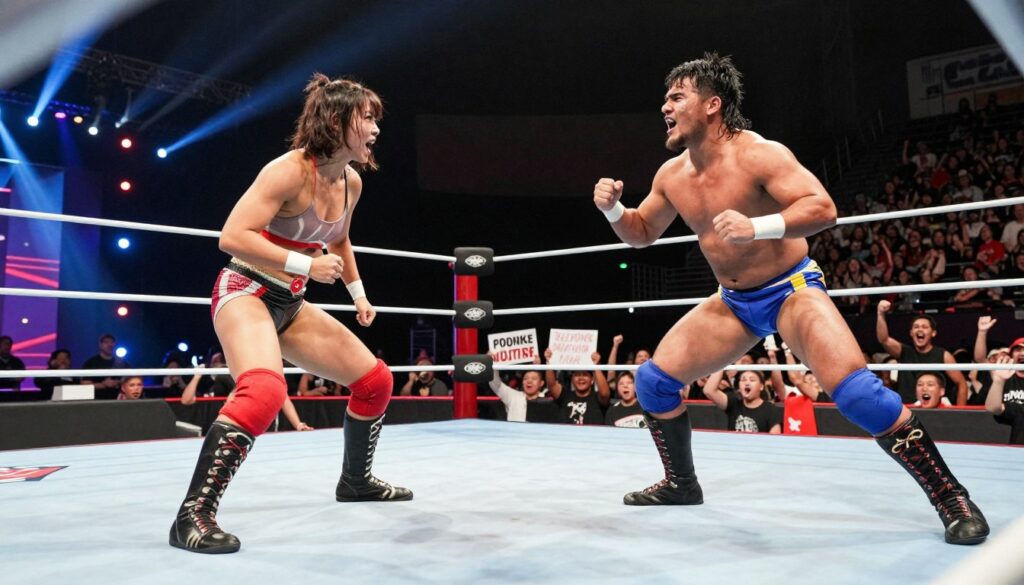
Today’s heroes show strength through vulnerability. We see them as people, not just wrestlers. Becky Lynch went from being overlooked to becoming “The Man.” Her journey was inspiring.
Hangman Adam Page in AEW is another example. He’s not perfect, but his struggles and victories touch our hearts. His win was a victory over his own fears.
The heart of today’s heroes is authenticity. We connect with them because they’re real. We see ourselves in their struggles and victories. It’s not just about winning; it’s about being true to oneself.
In a world where people want real connections, being real is the greatest power a hero can have.
Why Fans Turn on Heroes
The crowd’s roar can quickly turn to boos, showing how fragile a wrestler’s bond with fans is. We decide if a hero stays loved or falls. Our cheers are a loan, not a gift. The difference between a hero and a villain is very thin, and knowing why fans change is key to wrestling’s storytelling.
Heroes are not just athletes; they represent our hopes. We see ourselves in their fights and wins. But when this connection weakens, the reaction can be harsh. It’s a balance of trust, and when it breaks, the results can be dramatic.
The Fine Line of a Babyface
Being a babyface is like walking a tightrope. They must be relatable yet inspiring, strong yet open. If a hero becomes too flawless or overexposed, the magic fades. We, the audience, quickly spot when a character’s struggles or wins feel fake.
This is when the “cool heel” becomes interesting. A character like The Rock’s “Hollywood” persona was so captivating in his villainy that fans were drawn to him. This made the intended hero work harder to keep our support.
Not growing or being overexposed can lead to mixed reactions. John Cena, for example, became too dominant in the 2010s. His victories were too predictable, leading some fans to rebel. They wanted more complexity and the “cool” factor seen in villains.
When the Crowd Turns
At times, the crowd turns against a hero due to real-world injustices. The Montreal Screwjob is a prime example. Bret “The Hitman” Hart, a beloved champion, was betrayed backstage, leading to a shift in fan perception. He became a hero who was wronged, showing that real struggles can forge a hero more than scripted wins.
This shows the fine line heroes walk. They can be too perfect or too exposed without evolving. This leads fans to seek entertainment in more complex, morally grey characters. It’s a balance between being a symbol and a relatable character with flaws.
To understand this dynamic, consider the spectrum of fan reactions:
| Fan Perception Trigger | Typical Fan Reaction | Common Storyline Culprit |
|---|---|---|
| Overexposure & Predictability | Boredom, Apathy, “Go-away” heat | The hero wins the same way, every time. Victories feel unearned. |
| Perceived Inauthenticity | Distrust, Rejection, Mockery | Forced catchphrases, a gimmick that doesn’t fit the performer, or a poorly conceived wrestling gimmick that the audience rejects. |
| A More Compelling Antagonist | Cheering the “Bad Guy” | The villain is more charismatic, complex, or simply “cooler,” making the hero seem bland by comparison. |
| Real-World Sincerity | Massive, Empathetic Support | A real-life display of injustice or struggle (e.g., The Montreal Screwjob) that creates a pure, organic connection. |
The bond between a hero and fans is wrestling’s most sacred thing. It’s a living relationship that needs care from both sides. When honored with authenticity, story, and vulnerability, cheers are the most powerful force. But when ignored, the silence or boos can be a hero’s biggest defeat.
The Balance Between Edge and Honor
In the world of professional wrestling, the best heroes are those who find a balance. They are not just good guys; they are complex figures. They show us that being a hero is not about being perfect, but about being true to oneself.
This balance between being rebellious and honorable makes a legend. It’s what makes a hero stand out.
Walking the Line
What makes a hero legendary is the tension between being good and being real. Fans want a hero who is both flawed and strong. They want someone who breaks rules for the right reasons, yet stays true to their values.
This tightrope walk creates the most exciting and enduring heroes. They are bold enough to be interesting, yet noble enough to be admired.
Anti-Heroes and Noble Champions
This balance gives us two beloved types of heroes. On one side, we have the anti-hero, the rebel. “Stone Cold” Steve Austin is a great example. He broke all the rules and gave fans a thrill of rebellion.
Yet, he fought for what was right. He was edgy, but his cause was just.
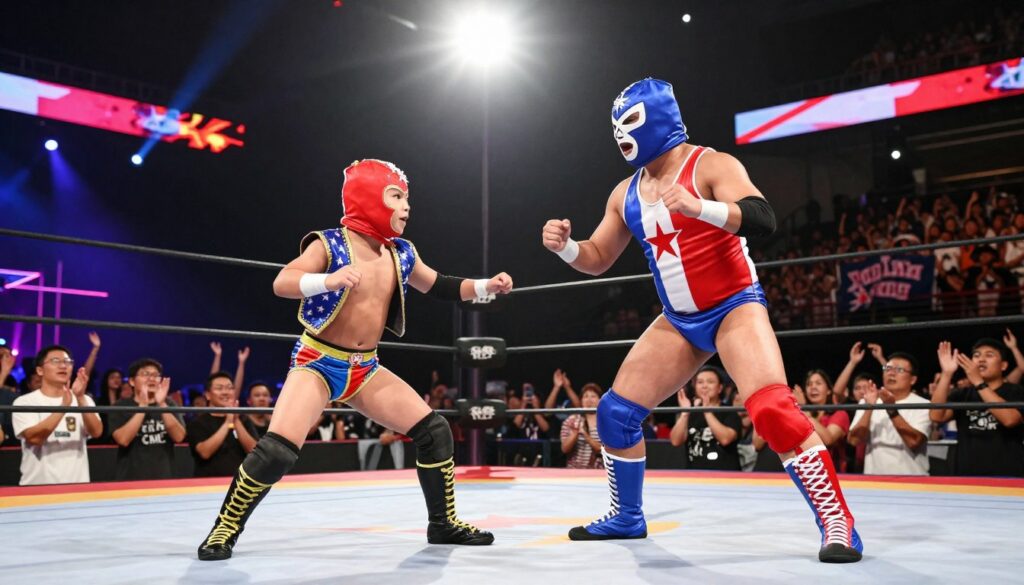
On the other side, we have the noble champion. Bret “The Hitman” Hart is a perfect example. He was known for his skill and integrity. He was a hero of excellence.
“The American Dream” Dusty Rhodes was another hero who connected with fans. His heart and charisma made him a champion of the people. The table below shows the core of these heroes:
| Archetype | Core Trait | Key Example | Fan Connection |
|---|---|---|---|
| The Rebel/Anti-Hero | Edge, Defiance, Rule-Breaking for a Cause | “Stone Cold” Steve Austin | Empowerment, Defiance of Authority |
| The Noble Champion | Honor, Technical Mastery, Integrity | Bret “The Hitman” Hart | Respect, Skill, and Principle |
| The Common Man Hero | Heart, Charisma, Relatability | Dusty Rhodes | Relatability, Everyman’s Champion |
This balance is very delicate. If a hero leans too far towards being rebellious, they can become a villain. On the other hand, being too pure can make them seem out of touch.
The greatest heroes find this balance. They show us that being a rebel with a cause is powerful. This balance is why a babyface’s turn can be so dramatic—it’s the balance tipping too far.
In the end, the most beloved heroes master this balance. They prove that true strength comes from holding two powerful ideas together: the fire to fight and the honor to fight for what’s right.
Legacy of Wrestling Heroes
The true mark of a wrestling hero is not just one match or cheer. It’s the legacy they leave behind. They become part of our shared story.
The Undying Impact of a True Hero
The greatest wrestling heroes shape the sport. Bret “The Hitman” Hart’s technical skill defined an era. The Undertaker’s three-decade legacy created unforgettable moments.
Sting’s career, from WCW to his final run, shows a hero’s appeal lasts. Their careers show a true hero’s impact goes beyond titles, as seen in this history of wrestling’s greatest babyfaces.
More Than a Pop: A Lasting Mark
The greatest wrestling heroes leave a lasting mark. It’s the sound of glass shattering for Stone Cold Steve Austin. Or the roar for a beloved hero’s music.
These moments become part of us. We are grateful for the stories they’ve given us. Stories of resilience, standing up for what’s right, and connecting with millions. They teach us, inspire us, and remind us why we cheer.