
We’re excited to take you into the rigorous and inspiring world of athlete development. We’re happy to show you how today’s top athletes are made. This world combines old traditions with new science.
This part looks at the early steps of an athlete’s journey. From their first time on the mat to becoming TV stars. We’re eager to dive into the physical and mental challenges of wrestling.
It begins with a strong focus on basics. We work on agility, explosive power, and quick reflexes. Drills like the Agility Shuttle improve quickness and footwork needed for wrestling.
Today’s wrestling training is a science. At the best centers, sports science and injury prevention are key. We use advanced methods to help athletes recover and perform well.
This journey is about long-term growth. It’s not just about a strong body. It’s also about mental toughness and showmanship that fans enjoy. We’re proud to help these amazing athletes on their way.
Breaking Into Wrestling
Every champion wrestler’s journey starts with a step into the ring. This first step often happens at a local club that focuses on fun and basic skills. For young athletes, wrestling is about more than just moves. It’s about loving the sport in a safe, supportive place.
We follow the Long-Term Athlete Development (LTAD) model. It starts with the FUNdamentals stage for kids aged 6-9. This stage is not about winning or complex moves. It’s about learning the basics of movement like Agility, Balance, Coordination, and Speed.
Quality wrestling schools know how important the first coach and environment are. A supportive place where safety and fun come first helps kids build confidence. This early experience is key for any future champion, laying the groundwork for passion and skill.
As kids get older, training becomes more specific to wrestling. A structured program following the LTAD model is vital. The best wrestling schools offer a clear path for growth, ensuring training keeps up with the athlete’s development. This approach prevents burnout and keeps the sport fun and sustainable.
For those ready to move forward, we offer a detailed path from basics to advanced performance. Check out our pro wrestling training program. It’s designed to take athletes from the movement basics to a professional level, in a supportive and safe setting.
Getting into wrestling is more than just learning moves. It’s about building a foundation of movement in a positive environment. Finding the right wrestling school that puts athletes first is the first step for any champion.
Traditional Wrestling Schools
In the heart of every professional wrestler’s journey lies a foundational chapter. It’s not in the bright lights of the arena but in the unassuming, often gritty, training halls of traditional wrestling schools. This is where the journey to the squared circle truly begins.
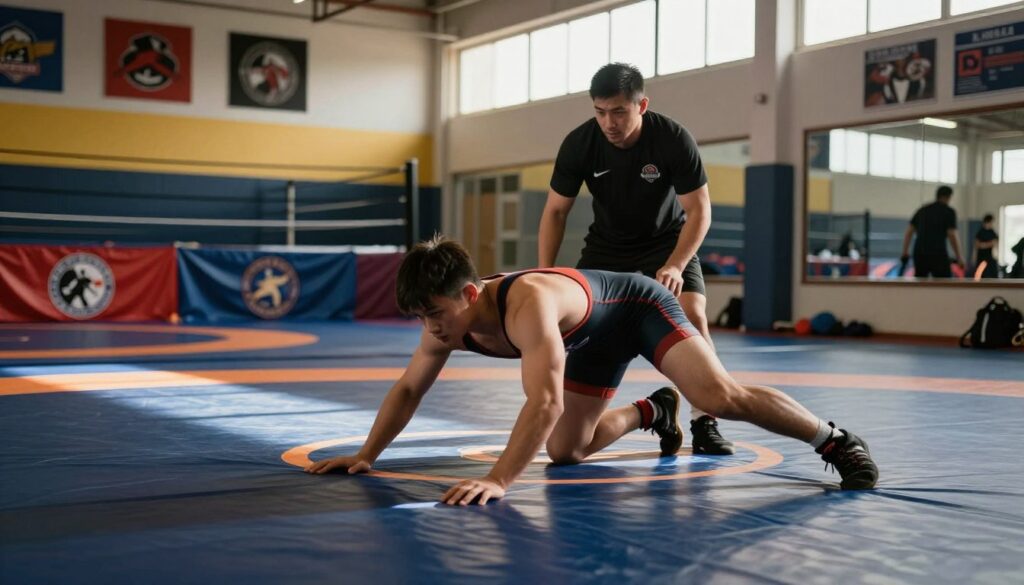
We believe these grassroots institutions are the unsung heroes of our sport. They are the grassroots incubators where passion is first kindled and the first steps of a wrestler training journey are taken. These schools, often tucked away in local gyms and community centers, serve as the sport’s lifeblood, instilling the very first lessons of the craft.
This early phase of a wrestler’s development aligns perfectly with the Long-Term Athlete Development (LTAD) model. The journey begins with the Active Start stage (ages 0-6), where the focus is purely on fun, play, and developing basic motor skills. This is followed by the FUNdamentals stage (ages 6-9 for girls, 6-8 for boys), where fundamental movement skills are honed through sport-like games and activities. Traditional schools are masters at this, turning complex moves into engaging drills and fostering a love for the sport’s physicality.
At the core of this wrestler training is a culture of discipline and respect. These schools are less about creating immediate stars and more about building a foundation. The atmosphere is one of mutual respect—for the sport’s history, for the coaches, and for fellow trainees. The focus is on mastering the basics: the lock-up, the tie-up, the fundamental takedowns and holds. It’s a world where the wrestler training philosophy emphasizes safety, technique, and respect for the craft above all else.
These traditional schools are more than just gyms; they are communities. They are where a young athlete’s passion is first ignited, where the first bump is taken, and where the core values of the sport—discipline, perseverance, and respect—are instilled long before the bright lights ever come on. This grassroots, foundational wrestler training is the essential first chapter in every great wrestling story.
Modern Performance Centers
Traditional schools laid the groundwork, but today we need a more scientific and holistic approach. The WWE Performance Center is leading this change. It’s not just a gym with a ring; it’s a 26,000-square-foot training ecosystem.
This facility is a game-changer. It has seven full-size training rings, allowing for multiple classes at once. It also has a top-notch strength and conditioning area, a physical therapy and medical facility, and a production studio. The focus is now on building the complete sports-entertainer.
The heart of a modern WWE performance center is sports science. It uses data analytics and biometrics to track an athlete’s health. This approach personalizes training, focusing on strength, conditioning, and in-ring psychology.
This change in training is part of a bigger trend. To see how training grounds have evolved, from legendary dojos to corporate facilities, explore the history and impact of the world’s best wrestling. The Performance Center model is setting a new global standard.
The facility also focuses on non-physical skills. There are promo rooms for honing microphone skills and character work. On-site production studios help with interview segments and on-camera personas. The goal is to graduate a fully-formed performer, ready for TV.
This model shows the future of wrestling development. It’s a holistic ecosystem where sports science, character development, and in-ring technique come together. The WWE Performance Center is more than a gym; it’s a lab for creating the total entertainer-athlete, ready for the global stage.
Physical Conditioning & Promo Training
Wrestling training and schools focus on two key areas: physical preparation and character development. A wrestler needs both strength and charisma to succeed. We aim to create athletes who are also compelling entertainers.
Physical conditioning for wrestling is more than just building muscle. It’s about gaining strength, power, and stamina for high-impact moves. A good training program includes:
- Strength & Power: Building functional strength for lifts, throws, and slams.
- Agility & Cardio: Drills that enhance footwork, reaction time, and the ability to perform at a high pace.
- Injury Prevention: A periodized training plan that builds in recovery and focuses on joint stability and core strength to withstand the demands of the ring.
Promo training is just as important as physical conditioning. It teaches you to connect with the audience and tell a story. This skill is essential for professional wrestling training and schools that aim to produce well-rounded performers.
The table below shows how physical conditioning and promo training work together:
| Training Focus | Physical Conditioning | Promo & Character Development |
|---|---|---|
| Primary Goal | Build a resilient, powerful, and agile athlete capable of performing and withstanding impact. | Develop charisma, mic skills, and a compelling character to connect with the audience emotionally. |
| Key Components | Strength & Power, Agility Drills, Injury Prevention, Periodized Training | Microphone Technique, Character Psychology, Improvisation, Crowd Engagement |
| End Result | An athlete who can perform high-impact moves safely and with explosive power. | A performer who can build a story, generate crowd reaction, and build a personal brand. |
True excellence comes from balancing physical skill and charisma. A wrestler must be able to perform and tell a story. This integrated approach to wrestling training and schools ensures that performers are ready for the spotlight.
Injury Risk and Mental Toughness
In professional wrestling, the physical and mental challenges are huge. We think that proactive safety and mental training are key, not just nice to have. It’s about being tough and learning to take falls.
Wrestling is tough and can hurt you. You might get sprains, strains, or even concussions. We face this head-on. We use scientific training and safety plans to lower risks.
We prevent injuries with smart training. Our program, like the Wrestling+ protocol, cuts injury rates by up to 58%. It’s not just about getting strong. It’s about making muscles and joints strong for wrestling.
Learning the right moves is key. We teach safe moves from the start. This protects wrestlers and their opponents.
The ring is tough, both physically and mentally. Mental toughness sets wrestlers apart. The crowd, pressure, and injuries test their will. We train minds to handle stress, stay focused, and keep going.
We focus on both body and mind. Our training includes:
- Resilience Drills: We practice under pressure to build mental strength.
- Visualization Techniques: We help wrestlers imagine success and manage stress.
- Injury Recovery Support: We teach smart recovery and knowing when to rest.
We aim to make complete performers who are strong in both body and mind.
We care for the whole athlete. We value mental health as much as physical strength. We teach students to listen to their bodies and build mental toughness. This way, they’re ready for the ring’s challenges.
From Student to TV Ready
The last stage of wrestler training turns a skilled athlete into a TV superstar. This phase is all about mastering the art of performance. It’s where a talented trainee becomes a marketable superstar.
Places like the WWE Performance Center are key for this stage. Here, trainees learn to perform for TV, not just fight. They practice every detail, from facial expressions to camera angles. It’s about being a great athlete and a compelling character under the lights.
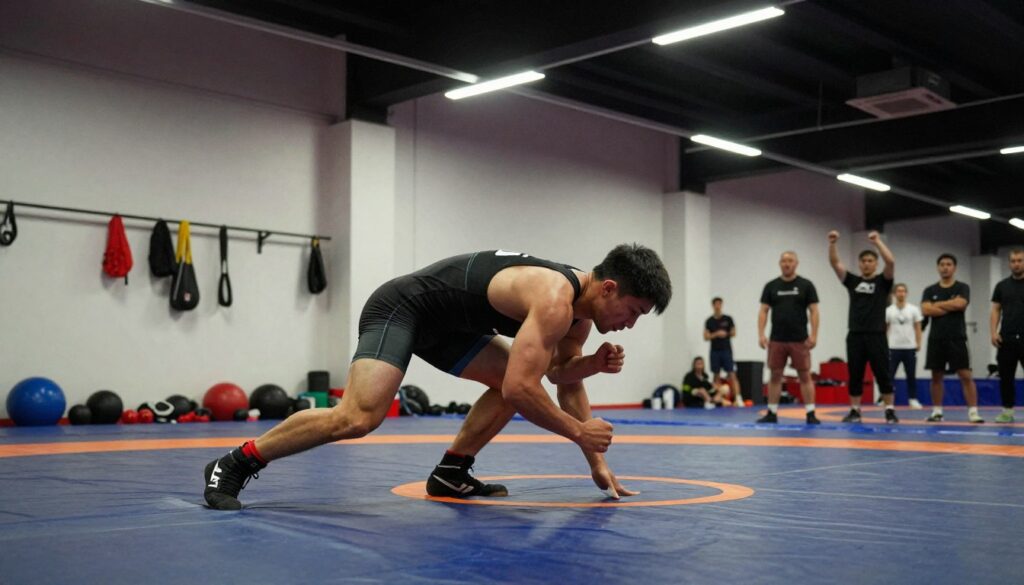
Skills blend together at this stage. A wrestler tells a story in the ring, but a TV star does it through every performance. Character work, promo skills, and in-ring psychology merge into one package. The systematic training helps a performer switch from interviews to matches smoothly, keeping the story going.
The table below shows how a trainee becomes a TV-ready performer:
| Skill Area | Trainee Level | TV-Ready Performer |
|---|---|---|
| In-Ring Performance | Executing moves safely and in sequence. | Choreographing and performing for camera angles and audience sightlines. |
| Character Portrayal | Understanding a character’s motivation. | Consistently embodying a character through body language, even when not speaking. |
| Storytelling | Following a match layout. | Driving the narrative of a match, controlling pace, and building drama for the TV audience. |
| Media & Presentation | Delivering a rehearsed promo. | Handling live interviews, engaging with social media, and understanding brand representation. |
This final stage of wrestler training is about blending everything. It’s where athleticism, acting, and showmanship come together. The performer learns to control the ring and the audience’s attention. The journey is long, but this final polish prepares a wrestler for TV, where every moment matters.
Common Myths About Training
We often hear myths about wrestling training. Let’s clear the air on a few. The idea of overnight success is one. Becoming a top performer takes years, not days or weeks.
The “10-year rule” or “10,000-hour rule” proves this. It shows that elite skill comes from years of hard work and practice.
Another myth is that more training is always better. But overtraining can lead to burnout and injuries. The WWE Performance Center uses science to train effectively. They focus on quality over quantity, balancing drills with recovery.
Lastly, technical skill alone doesn’t guarantee success. Wrestlers need to connect with fans, build a character, and master the mic. The WWE Performance Center trains the whole performer, not just the athlete.
We support a balanced, evidence-based approach. It respects the athlete’s health and builds a lasting career. It’s about working hard and smart for a sustainable future in wrestling.