
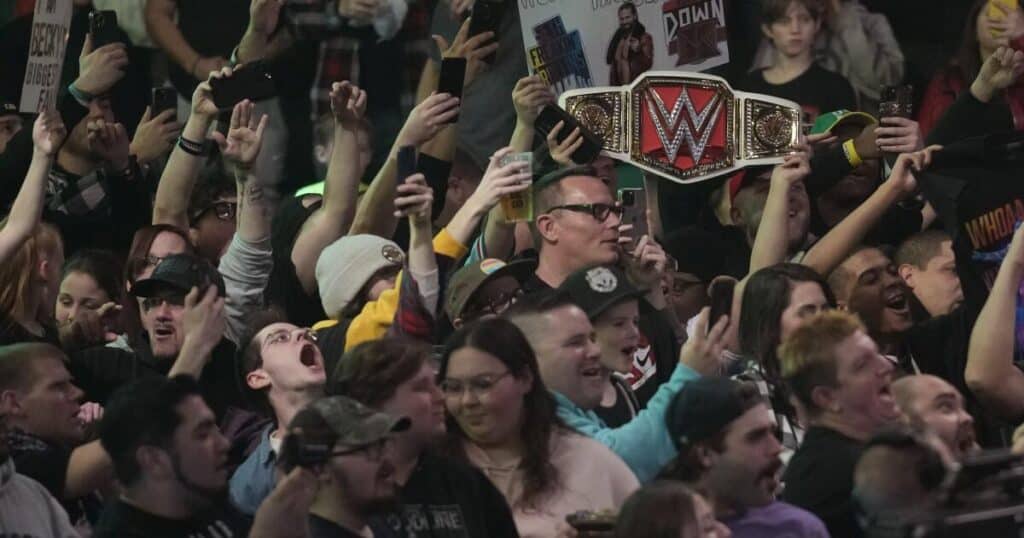
Professional wrestling occupies a profoundly unique space within the global entertainment landscape. It is neither a purely competitive sport nor a rigidly scripted television drama. Instead, it exists as a volatile, interactive piece of performance art. In traditional athletics, crowd noise is simply an atmospheric byproduct of the action on the field. Conversely, the professional wrestling crowd is an active participant. They act as a collective character whose real-time reactions can fundamentally alter a multi-million-dollar storyline. Over the last two decades, this dynamic has shifted dramatically. Consequently, the audience influence has evolved from passive consumption into aggressive co-authors of the show. Today, they wield enough influence to force massive corporate pivots.
The Death of Kayfabe and the “Smart Mark”
To understand this paradigm shift, one must first examine the historical concept of “kayfabe.” For generations, the wrestling industry operated under a strict code of silence. Promoters presented their predetermined matches and larger-than-life characters as absolute reality. They dictated who the heroes (faces) and the villains (heels) were. In response, the audience largely complied, cheering and booing on command.
However, the advent of the internet and the proliferation of backstage reporting shattered this illusion entirely. As a result, the modern wrestling fan is highly educated on the behind-the-scenes mechanics of the industry. They do not merely watch the matches unfold. Rather, they deeply analyze the intricacies of professional wrestling booking. Fans routinely debate contract statuses, backstage politics, and creative directions. This elevated awareness transformed the traditional “mark” into the “smark” (smart mark). This new classification of viewer reacts to the corporate decisions driving the narrative, rather than just the fictional storyline itself.
Audience Hijackings: Forcing Creative Pivots
Because of this newfound awareness, audiences actively reject narratives that feel forced or inauthentic. When a promotion attempts to position a hand-picked corporate favorite as the top star, modern crowds often rebel. They will readily hijack live television broadcasts to voice their displeasure.
For instance, the definitive turning point occurred in 2014 with Daniel Bryan’s “Yes Movement.” WWE attempted to bypass the organically popular Bryan in favor of a returning veteran for the WrestleMania 30 main event. In response, audiences routinely drowned out segments with deafening chants. They effectively held the live broadcasts hostage until the company relented. Ultimately, management was forced to rewrite the finale to feature Bryan.
A decade later, this phenomenon proved it was not an anomaly, but the new standard operating procedure. During the build to WrestleMania 40 in early 2024, WWE seemingly planned to replace fan-favorite Cody Rhodes with Hollywood megastar Dwayne “The Rock” Johnson. Instead of accepting the blockbuster match, the audience launched the “We Want Cody” movement. This organic outrage quickly bridged the gap between live arena hostility and digital virality. Consequently, it forced the promotion into a massive creative pivot that turned The Rock into a villain and restored Rhodes to his rightful spot.
The New Metrics of Wrestling Success
This modern dynamic requires promoters to measure success through a vastly different analytical lens. Traditional metrics, such as ticket sales and television ratings, are still important. However, they are now heavily supplemented by immediate, granular feedback mechanisms.
| Performance Metric | Traditional Booking Era | Modern “Audience Influence” Era |
| Primary Goal | Protect the illusion of reality (Kayfabe). | Generate authentic emotional engagement. |
| Gauging Popularity | Merchandise sales and localized live event reactions. | Trending digital hashtags and sustained social media metrics. |
| Handling Backlash | Ignore the crowd and push through the planned narrative. | Pivot the storyline to capitalize on the organic friction. |
| Character Alignment | Strictly defined good guys (Faces) and bad guys (Heels). | Morally ambiguous characters (Tweeners) judged by work rate. |
Social Media and the Accelerated Feedback Loop
Furthermore, the integration of social media has accelerated this feedback loop to an unprecedented degree. A chant that starts in a localized arena on a Monday night is instantly clipped, shared, and amplified. By Tuesday morning, it is a trending topic across global digital networks. By Wednesday, the promotion’s creative team is actively restructuring their television scripts to address the fallout.
Therefore, the modern wrestling booker must operate much like a political campaign manager. They are constantly analyzing polling data—in the form of crowd noise and digital engagement. This ongoing analysis ensures their chosen candidate truly resonates with the electorate.
The Future of Interactive Entertainment
Ultimately, the era of the dictatorial wrestling promoter is dead. The contemporary product is a symbiotic collaboration between the athletes in the ring, the writers behind the curtain, and the thousands of vocal critics seated in the bleachers. For sports franchises and entertainment properties looking to understand the future of modern fan engagement strategies, the professional wrestling industry serves as a masterclass. It proves that when you invite your audience behind the curtain, you lose total control of the script. However, in return, you gain a deeply invested community that will fight fiercely for the story they want to see told.