
Do you remember the goosebumps when “Stone Cold” Steve Austin’s glass shattered? Or the electric hush before The Rock would lay the smack down? That’s the power of a great wrestling promo. It’s the soul of a character and the fuel for every legendary rivalry.
A great promo is a story. It’s the monologue that builds the world beyond the ring ropes. It’s where a wrestler’s heart and mind are laid bare, connecting with us on a human level and making us care about the battle to come.
We believe the best wrestling isn’t just about the moves. It’s about the stories that make us care. A powerful promo can turn a wrestler into a hero we cheer or a villain we love to hate. It’s the art of making a moment unforgettable.
In this guide, we’ll explore this essential, often overlooked art form. We’ll share stories from legends and modern stars to show how a master of the mic, like Paul Heyman, can turn a simple speech into a moment we all remember.
What Is a Promo?
A wrestling promo is more than just a speech before a match. It’s a way for wrestlers to connect with their audience on a deep level. It’s not just words; it’s a character’s heart beating out to the crowd.
It’s a promise of conflict and a declaration of intent. In wrestling, the power of a promo is as important as any physical move. A great promo makes us believe in the character and their story.
The Art of the Monologue
The mic is as vital as the ring in wrestling. A promo is a dramatic monologue where performers build a story. They create heroes or villains we love to cheer or hate.
The best wrestling promos make us feel why what’s happening matters. It’s the fire in their eyes and the way they speak. It’s what turns a character into a living, breathing being.
The art of the monologue shines in promos. It’s not about being loud; it’s about being true. Performers like Adam Cole show this by their body language and tone.
They make us feel their emotions as if they were our own. It’s a powerful way to connect with the audience.
More Than Just Hype
Promos do more than just hype a match. They develop characters and make us care about their stories. A great promo can turn a hero into a villain or make a villain relatable.
It’s the reason behind the fight. When done right, it sells more than just tickets. It turns a match into a personal, emotional journey. It connects the physical action in the ring to the story we care about.
Today’s wrestling promos range from scripted to free-form. The magic happens when performers speak from the heart. Raven calls it a “psychological tapestry,” where authenticity shines through.
It’s not about memorizing lines but connecting with the words. This makes every word feel real and personal.
| Element | Scripted Promo | Improvised/Free-form Promo |
|---|---|---|
| Core Approach | Lines are written and rehearsed, often word-for-word. | Based on key points or “bullet points,” allowing for natural delivery. |
| Authenticity | Can sound polished but may lack spontaneity. | Often feels more raw, personal, and “real.” |
| Character Connection | Relies on the performer’s ability to sell pre-written material. | Allows the performer’s genuine personality and cadence to shine through. |
| Best For | Complex storylines and ensuring key narrative points are hit. | Building a performer’s unique, organic connection with the audience. |
In the end, a promo is the soul of a wrestling character. It’s what makes us care and turns a match into a must-see event. It’s where legends are made, not just in the ring but on the microphone.
Territory-Era Promo Styles
Before the polished WWE segments, wrestling was different. The territory-era promos were raw and unscripted. They relied on performers’ quick thinking and crowd connection.
This era gave us authentic and electric wrestling promos. Their power came from a unique creative process.
The Art of the Bullet Point
Promos in the territory days were based on bullet points. Raven explained that wrestlers got a few key points to hit. They didn’t memorize scripts but built promos in their own voice.
This wasn’t about reciting lines. It was about embodying a character’s point of view.
Raven said this method forced performers to understand their character’s psychology. They had to know why their character felt certain ways. This method led to spontaneous, passionate, and believable performances.
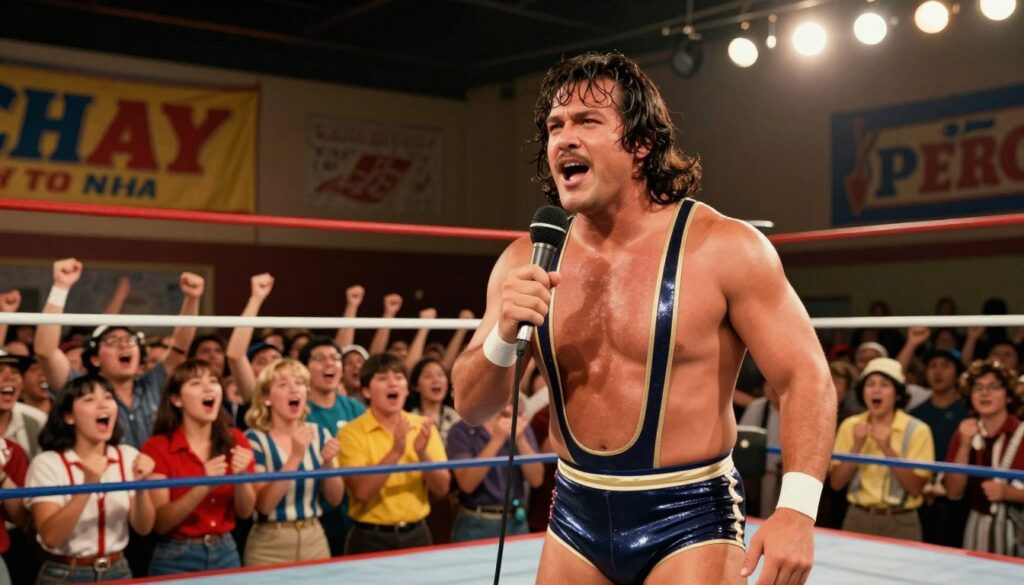
We can learn from legends who mastered this art. The territory system was a proving ground. Performers like Ric Flair, Dusty Rhodes, and Roddy Piper used bullet points for raw emotion and character work.
A great promo isn’t just about what you say. It’s about how you say it. Legends knew how to read crowds and adjust on the fly. Their promos felt real because they were real.
This legacy shows that authentic character is key. The territory days forced performers to be creative and deeply connected. While today’s environment has its benefits, we celebrate this era for its raw connection to the audience.
Iconic Promos in History
Some wrestling promos are unforgettable, leaving a mark on our memories. They’re not just interviews; they’re emotional moments that capture the essence of their time. These promos connect with us deeply, inspiring cheers and chants. They are the best wrestling promos that defined eras and sold out arenas.
The Promos That Defined Eras
Every era of wrestling has its own iconic promos. A great promo can shape a wrestler’s career and create lasting memories. These speeches build more than just a match; they build a legacy.
From “Austin 3:16” to the “Pipebomb”
On June 23, 1996, “Stone Cold” Steve Austin changed wrestling forever. His “Austin 3:16” promo was a call to arms against the establishment. It was raw and real, connecting with fans who felt like outsiders.
The Rock and “Stone Cold” Steve Austin’s feud was legendary. Their promos were epic battles of words. It was a clash of titans that made their matches unforgettable.
John Cena’s “Doctor of Thuganomics” was a promo masterpiece. His freestyle rap promos were fresh and challenged the top stars. He performed, using rhythm and rhyme to connect with fans.
CM Punk’s “Pipebomb” promo in 2011 was groundbreaking. He called out the company and the status quo. It felt real and changed the game, showing the power of authenticity in promos.
The New School of Promo
Today’s promos have the same raw energy. Bron Breakker’s promos are intense, focusing on his family legacy. His authenticity is undeniable.
AJ Lee’s 2025 return promo was emotionally raw. She spoke about mental health and respect, showing vulnerability. It was a human moment that resonated deeply.
From Austin’s rebellion to Punk’s pipebomb, these moments show the power of a promo. The greatest promos are the soul of the story, not just hype.
| Promo | Wrestler | Era | Why It’s Iconic |
|---|---|---|---|
| “Austin 3:16” | Stone Cold Steve Austin | Attitude Era | Defined the anti-hero, blue-collar ethos of an era. |
| “My Way” Promos | The Rock, Steve Austin | Attitude Era | Pinnacle of a legendary feud; perfect character contrast. |
| “The Pipebomb” | CM Punk | Reality Era | Blurred reality and fiction, felt dangerous and real. |
| “The Doctor of Thuganomics” | John Cena | Ruthless Aggression Era | Freestyle rap flow, redefined a main eventer’s voice. |
| “I Need to Get This Off My Chest” | AJ Lee (2025 Return) | Current Era | Raw, emotional vulnerability about mental health and purpose. |
The best wrestling promos do more than sell tickets. They make us feel, connecting us to the characters on a human level. The microphone is a powerful tool, used to inspire and connect.
Verbal Psychology and Crowd Control
What makes a wrestling promo unforgettable? It’s not just the words. The best promo artists have a secret: they talk to the crowd, not just at it. They use the mic as a tool to change how we feel.
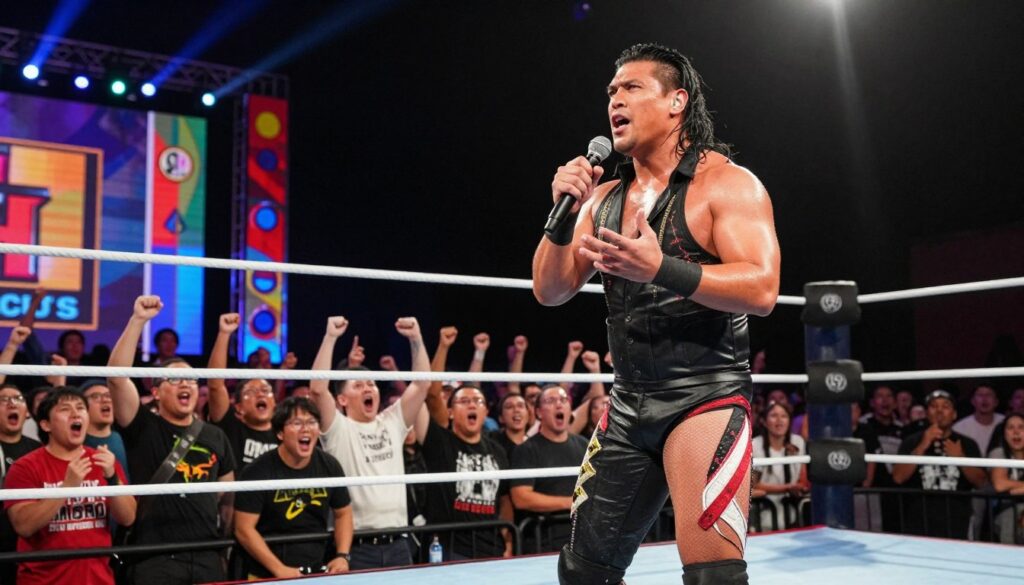
The Mic is a Weapon
A great wrestler’s mic is like a sword. They use their words carefully, like a fencer. It’s not about being loud, but about making an impact.
Think of the greats. They didn’t just say things; they made you feel them. A pause can be more powerful than a shout. A whisper can silence a crowd.
Reading and Controlling the Room
Great promo artists have a special connection with their audience. They listen and speak at the same time. It’s a conversation, not a one-way performance.
Consider two masters from different times:
- The Psychological Warfare of Raven: Raven’s promos were like psychological attacks. He spoke in a way that felt deep in your gut. He connected with his fans on a special level.
- The Technical Maestro, Adam Cole: Adam Cole plans his promos like a match. He adapts to the crowd’s mood in real-time. He knows how to make a joke or a serious line work.
The goal is to make the audience part of the show. It’s about shaping their energy. It’s not about controlling them, but guiding the room’s emotions.
This skill makes a promo artist legendary. It shows that wrestling is a deep form of performance. The greats connect with the crowd, manipulate them, and control the arena’s mood.
Scripted vs Improvised Promos
In today’s wrestling world, the fight between scripted and improvised promos is captivating. We’re torn between the polished, scripted shows of now and the raw, unpredictable past. The magic, or sometimes the flop, lies in the gap between the script and the performer’s instinct.
The Creative Freedom Debate
Raven, a wrestling legend, harshly criticized today’s scripted shows. He said, “Now they write for everybody.” He believed that talents like “Stone Cold” Steve Austin wouldn’t have become icons if they followed strict scripts. Raven’s words highlight the creative freedom debate: too much scripting can kill the real, raw charm that connects performers with fans.
Yet, today’s stars, like Adam Cole, have found a middle ground. They use a bullet-point framework but don’t stick to every word. They know the emotional beats and story points but let their artistry shine in the moment. This mix of planning and spontaneity is their secret.
Finding the Balance
The ideal spot is a balance between structure and soul. A promo that’s too free can wander, while one that’s too scripted feels stiff.
The best approach is a script that’s both structured and open to improvisation. It starts with a clear story and time frame, but leaves room for the performer’s flair. This way, the promo stays true to the story but also feels real and emotional.
When stars like Sami Zayn or Cody Rhodes are given this freedom, magic happens. Their promos feel like genuine, passionate moments, not just scripted lines. This is the perfect balance we all crave: a story told with purpose and passion.
Why Promos Make Stars
In the squared circle, a suplex shows power. But a great promo reveals a soul. In-ring skill earns respect, but connecting through a microphone makes a true star.
This final piece of the puzzle turns a talented wrestler into a character we love, hate, or love to hate.
The Mic is as Important as the Suplex
Wrestler Adam Cole said many promoters prefer a great talker over a silent technician. The reason is pure connection. A suplex is a move, but a promo is a story.
It is the tool that builds emotional stakes. “Stone Cold” Steve Austin’s beer celebration and The Rock’s “If you smell…” catchphrase were not just moments; they were declarations of character.
The mic is the primary tool for a wrestler to define their character’s purpose, vendetta, and personality. Without that voice, even the most athletic performer can feel like a shadow in the ring.
Building a Lasting Legacy
In-ring careers have a physical limit, but a character’s legacy can endure. Promos build that legacy. They create the personal connection that makes a win feel triumphant or a loss feel devastating.
Think of the intense promos of “Stone Cold” or the charismatic arrogance of The Rock. Their words built a bond with the audience that lasted far longer than any single match. A wrestler is remembered for their moments. A great promo creates a moment that lives in a fan’s memory long after the final bell has rung.
In the end, a promo is the final, essential ingredient. It turns a gifted athlete into a hero we cheer or a villain we despise. It is the ultimate tool for turning a wrestler into a legend.