
Professional wrestling operates as a mirror for regional values. Audiences in different countries demand completely different physical presentations from their athletes. What generates a massive reaction in Tokyo might draw total silence in New York. Promoters must adapt their product to match the deeply ingrained expectations of their local viewers. We see these regional styles evolve as direct reflections of societal norms, historical traditions, and local storytelling methods.
American Sports Entertainment: The Triumph of the Individual
The American approach to professional wrestling focuses heavily on extreme individualism and moral conflict. Storylines mirror the structure of blockbuster cinema and episodic television. Promoters prioritize charismatic characters, elaborate entrances, and dramatic microphone skills over pure technical grappling. The hero fights an oppressive system or a villainous rival to achieve financial success and championship glory. This format perfectly aligns with the American cultural focus on personal ambition, capitalism, and upward mobility.
Fans attending these events expect high-stakes soap opera drama. They react loudest when a storyline breaks the traditional rules of athletic competition. Mainstream American wrestling storylines rely on betrayal, corporate interference, and sudden surprises. The loud, rebellious nature of the performers feeds directly into pro wrestling crowd culture, where fans actively hijack shows to force their favorite individuals to succeed against corporate favorites.
Mexican Lucha Libre: Mythology and Working-Class Heroes
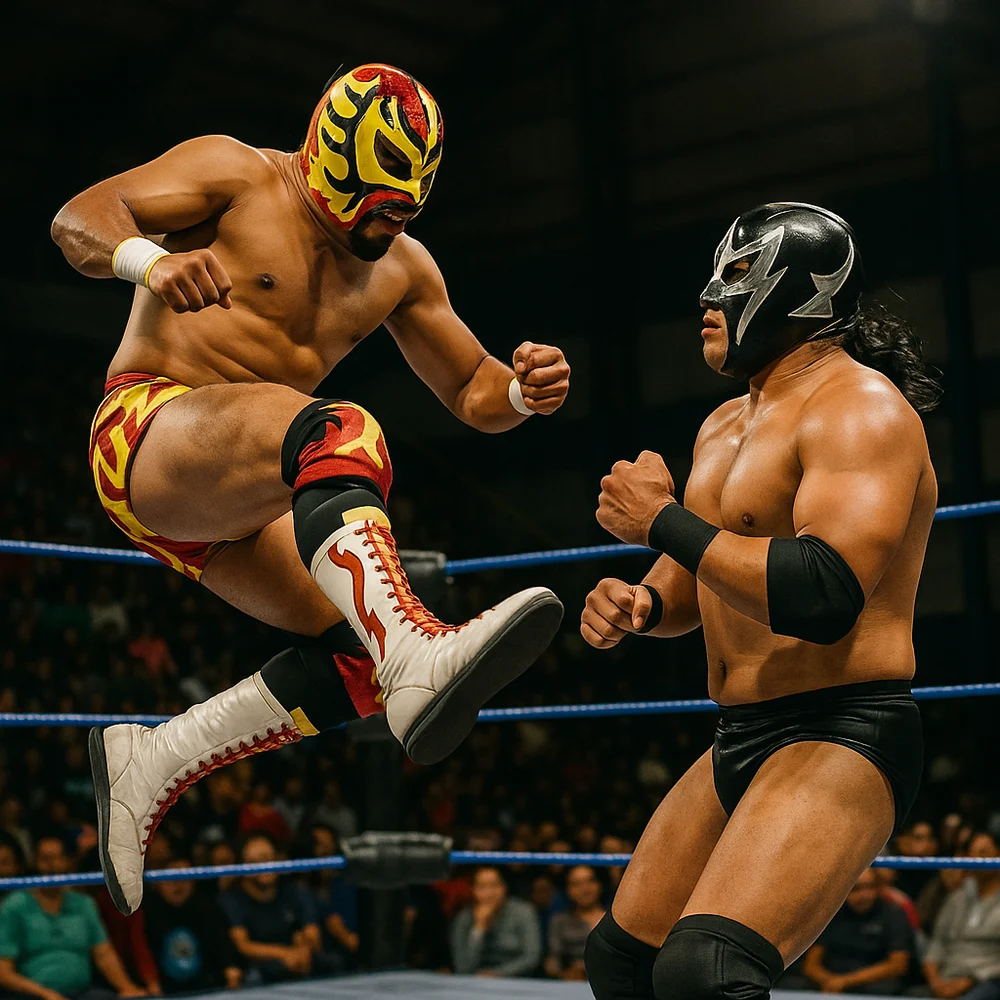
South of the border, Mexico presents a radically different athletic philosophy. Lucha Libre translates literally as “free wrestling” and operates as a dynamic, high-flying spectacle deeply tied to working-class identity. The performers, known as luchadores, execute rapid-fire acrobatics and complex aerial maneuvers. The defining feature of this style remains the sacred tradition of the mask. These colorful designs evoke ancient Aztec warriors, animals, and religious icons.
The mask transforms a standard athlete into a living mythological figure. When a luchador wages his mask in a high-stakes match, he risks his entire cultural identity. Losing the mask represents the ultimate professional humiliation. The Mexican government recently recognized this sport as an intangible cultural heritage, proving its massive social footprint. Families pass down allegiances to specific masked heroes across multiple generations. The heroic “técnicos” battle the villainous “rudos” in a constant, stylized war between good and evil that resonates deeply with the local populace.
Japanese Puroresu: Discipline and Fighting Spirit
Japan treats professional wrestling, known locally as Puroresu, with the same reverence granted to traditional martial arts. The presentation strips away the theatrical excess found in North America. Matches resemble legitimate athletic contests featuring stiff strikes, brutal suplexes, and grueling submission holds. The culture heavily values stoicism, endurance, and the concept of “fighting spirit.” A wrestler gains the crowd’s respect by surviving extreme physical punishment rather than delivering a clever insult on the microphone.
The audience behavior in Japan provides a fascinating contrast. Fans watch the technical sequences in respectful silence, applauding only when a competitor executes a particularly difficult maneuver or escapes a dangerous hold. This quiet, analytical viewing habit forces the athletes to tell their stories entirely through physical struggle. Analysts tracking global combat sports consistently note that Japanese wrestling directly inspired the early development of modern mixed martial arts. The undeniable rise of audience influence in recent years has seen Western fans begin to adopt and appreciate this highly respectful, athletic-focused presentation.
British Catch Wrestling: The Intellectual Match
The United Kingdom claims one of the oldest and most distinct regional styles. Originating in Lancashire, British “catch-as-catch-can” wrestling relies entirely on joint manipulation, leverage, and mat-based traps. Competitors treat the ring like a physical chessboard. The style values finesse and intelligence over raw power or flashy jumps. This grueling, intellectual approach reflects the gritty, industrial working-class roots of the British Midlands.
Today, performers from all these regions cross borders constantly. A Japanese striker might challenge a British technician in an American arena. This global exchange creates an incredible fusion of athletic philosophies. Viewers can experience many international traditions simply by tuning into global wrestling coverage. Professional wrestling remains a universal language of human struggle, perfectly translated to match the unique cultural heartbeat of the crowd.